
Why this problem matters
Most private-school admissions teams lose time in the same place: repetitive early-funnel questions. Families ask about deadlines, document requirements, visit logistics, and aid process timing in every channel.
The issue is not demand. It is routing. When staff spends peak-season hours re-answering standard questions, response quality drops where it matters most: high-intent families deciding whether to apply.
What FAQ deflection plus intent routing actually does
A useful admissions AI layer has two jobs:
- answer repeatable questions from approved school content
- route high-value conversations to humans with structured context
That means the system is not trying to replace counselors. It is removing queue noise and improving handoffs.
Tier 0: grounded FAQ answers
The assistant answers only from approved admissions pages and FAQ content. Strong responses include:
- direct answer in plain language
- source-linked page reference
- confidence check before sending
This is where most deflection happens.
Tier 1: intent capture and CRM routing
When intent is detected (for example, tour booking or application support), the AI captures key fields and routes to the right owner.
Typical fields to capture:
- target grade
- admissions cycle timeline
- campus or program interest
- financial-aid interest
- preferred follow-up channel
Tier 2: SLA-aware escalation
If confidence is low or the question is an edge case, the bot escalates with a concise package:
- conversation summary
- detected intent label
- urgency score
- suggested draft response
That reduces re-triage and shortens time to a human-quality answer.
A practical 6-week rollout for private schools
Weeks 1-2: build the approved answer corpus
Use admissions pages, process checklists, and date milestones as the only response ground truth.
Weeks 2-3: define intent taxonomy and ownership
Use labels that map directly to operations, such as deadline, visit, documents, financial_aid, application_status, and international.
Weeks 3-4: connect routing to CRM workflows
Require mandatory handoff fields and owner rules, with dedupe logic for repeat family inquiries.
Weeks 4-5: activate confidence thresholds
Auto-answer only above threshold. Below threshold, escalate automatically with transcript summary.
Week 6: review logs and tune
Audit incorrect answers, escalation quality, and ownership response speed. Update source content and thresholds before peak windows.

Metrics that show if the system is working
Track operating metrics, not vanity usage.
| Metric | Why it matters |
|---|---|
| FAQ deflection rate | Shows how much repetitive load is removed from staff queues. |
| Median first-response time | Measures family experience and operational responsiveness. |
| Inquiry-to-application conversion by intent | Validates whether routing is improving high-intent follow-up. |
| Escalation quality rate | Indicates whether admissions staff receive usable handoffs. |
| Deadline-window backlog | Exposes queue risk during peak admissions periods. |
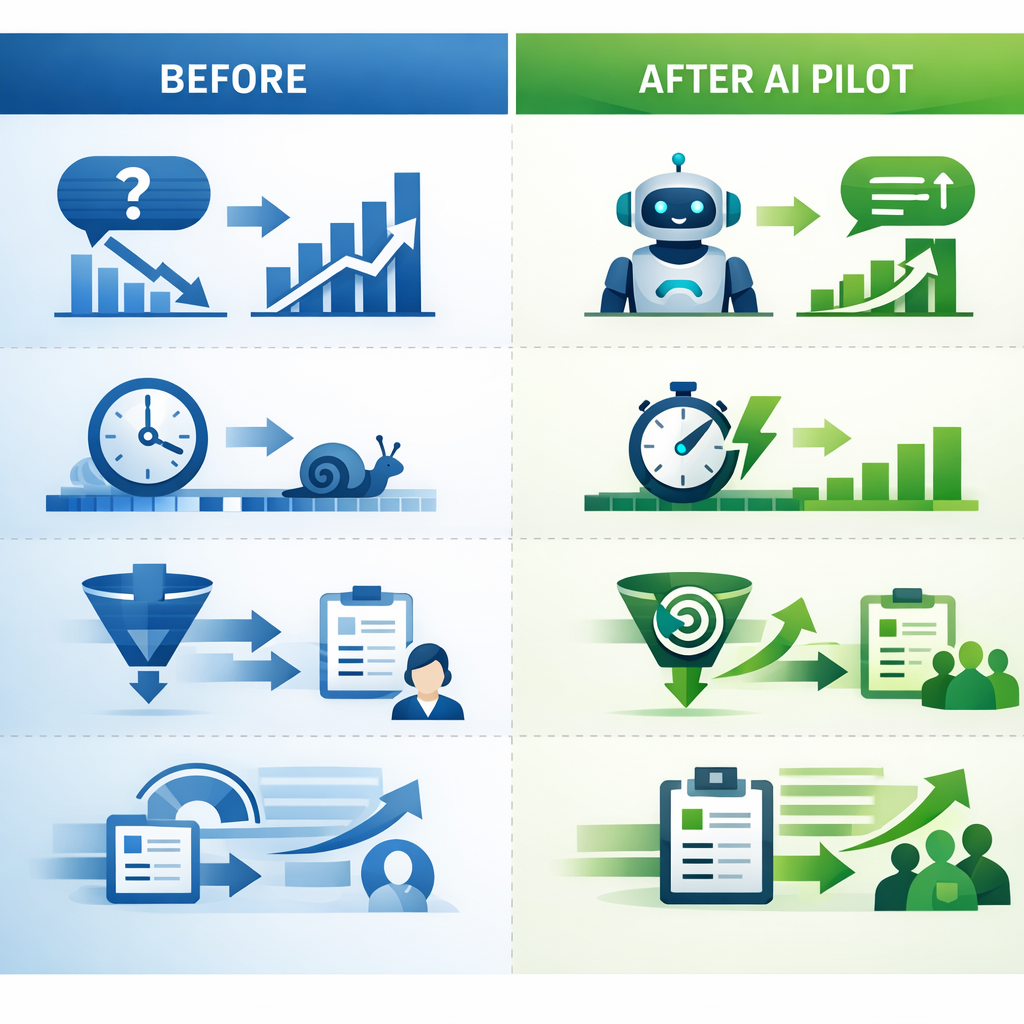
Governance guardrails to set before launch
- Keep answer scope restricted to approved, maintained content.
- Assign an admissions owner for policy updates and FAQ refresh cycles.
- Require human review pathways for nuanced aid and family-specific cases.
- Avoid exposing student-specific records in automated responses.
- Re-validate deadlines and process language before each admissions cycle.
Final takeaway
The highest ROI move is not a broad “AI admissions transformation.” It is a constrained operating workflow: deflect repeatable FAQs, route intent cleanly, and reserve counselor time for high-trust conversations.
That combination improves response speed and protects the relationship quality families expect when choosing a school.