
Why this problem matters
Most private schools do not lose families because nobody cared. They lose families because warning signs were visible in separate systems but never assembled into one action queue.
Admissions sees slow contract progress. Student support sees unresolved belonging concerns. Billing sees aid or tuition friction. Teachers and advisors log engagement changes. By the time these signals connect, the family has often already decided.
Retention teams need an operating workflow, not another dashboard.
What an AI re-enrollment risk workflow actually does
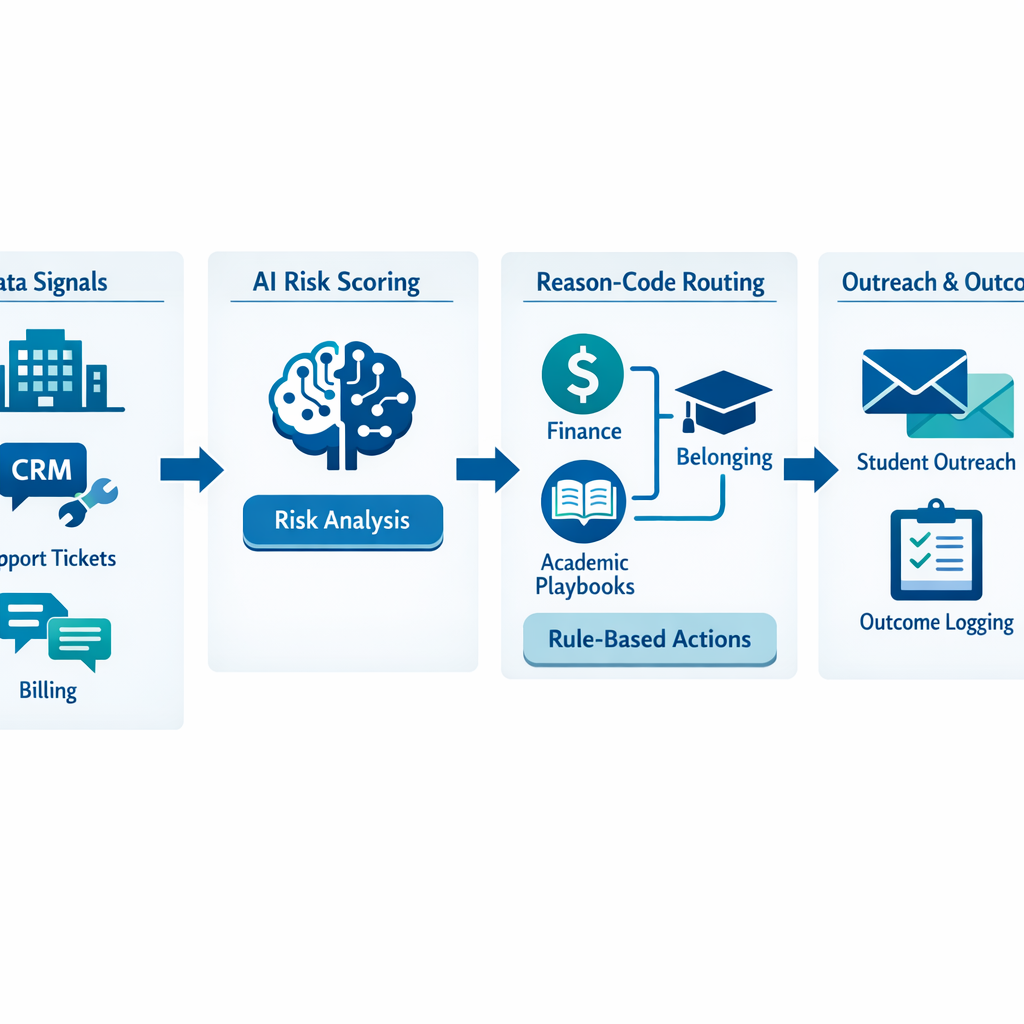
A useful system combines three layers:
- risk detection from existing operational signals
- reason-code routing into predefined save playbooks
- intervention tracking with clear ownership and SLAs
The goal is simple: reduce late surprises and increase timely, high-quality follow-up.
Layer 1: interpretable risk scoring
Start with weighted rules before complex machine learning. Example features:
- contract completion lag vs expected timeline
- unresolved parent concerns or repeated tickets
- attendance, behavior, or course-performance shifts
- aid/tuition friction flags
- negative survey or message sentiment trends
Each flagged family gets a risk tier and human-readable reason codes (finance, belonging, academic, communication, or multi-factor).
Layer 2: save-playbook routing
Reason codes should trigger concrete action plans, not generic reminders.
| Reason code | Playbook owner | First actions |
|---|---|---|
| Finance concern | Tuition/aid counselor | Clarify options, timeline, and documents needed within 24-48h. |
| Belonging concern | Advisor + division leader | Personal check-in, support plan, and follow-up touchpoint schedule. |
| Academic concern | Learning support + teacher team | Review performance context and propose intervention path. |
| Communication gap | Admissions/enrollment ops | Reset expectations, preferred channel, and cadence. |
The AI layer can draft outreach and case summaries, but owners remain accountable for final messaging.
Layer 3: intervention orchestration and SLA control
Every high-risk case should become a tracked task bundle:
- first outreach due date by risk tier
- required next-step fields
- no-response escalation after defined touchpoints
- weekly case-review digest for leadership
This prevents "flagged but untouched" cases, which is the fastest way to lose trust in retention programs.
A realistic 8-week rollout
Weeks 1-2: define signals, reason codes, and SLAs
Select 8-12 features and keep scoring explainable. Set tier definitions and target response windows.
Weeks 3-5: wire data and task automation
Connect SIS, CRM/helpdesk, and enrollment systems into a daily risk table and case-creation flow.
Weeks 6-7: pilot one grade band or division
Run weekly cross-functional reviews. Audit false positives and handoff quality.
Week 8: tune thresholds and scale
Adjust weights and playbooks from observed outcomes, then expand gradually across cohorts.
Metrics that prove retention impact
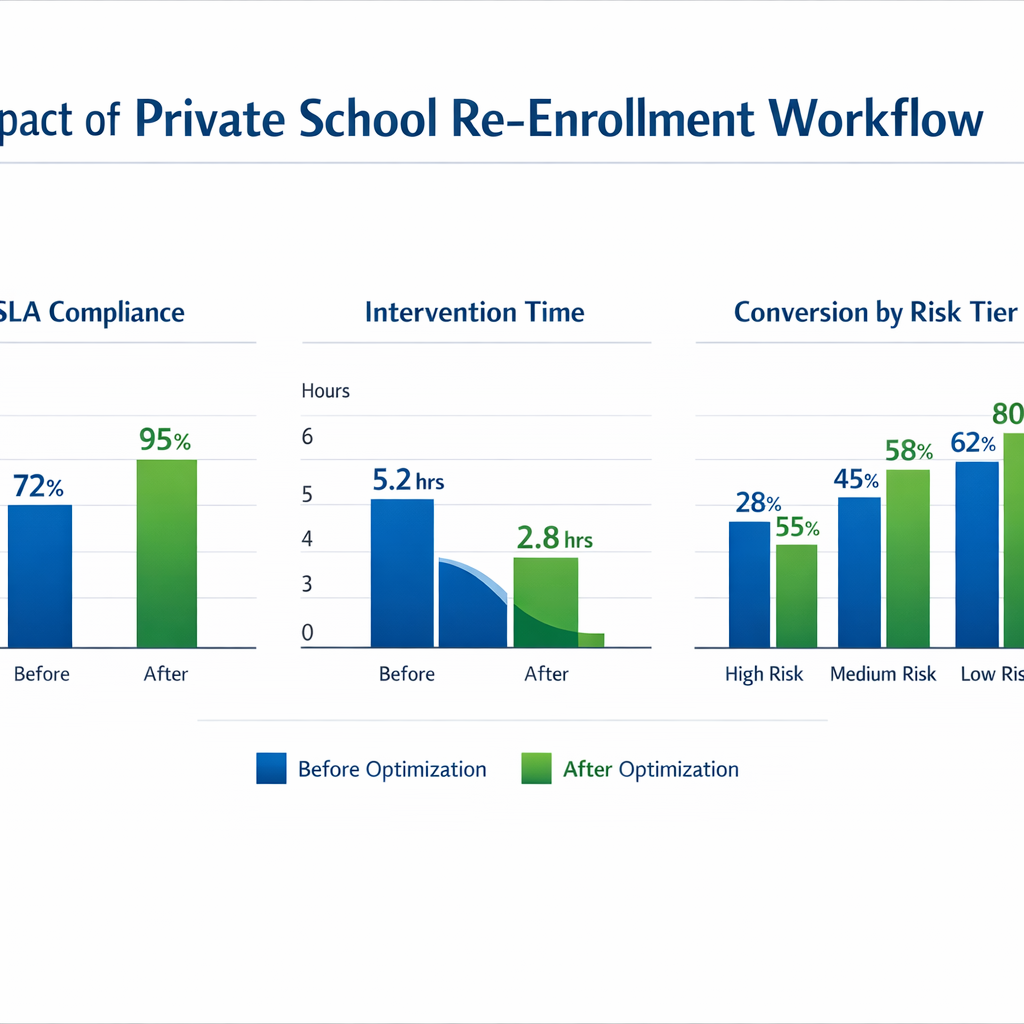
Track outcomes by risk tier and playbook, not just model accuracy.
| Metric | Why it matters |
|---|---|
| Re-enrollment rate lift vs prior year | Confirms whether workflow changes improve final outcomes. |
| % contacted within SLA by risk tier | Measures operational reliability under pressure. |
| Save-playbook conversion rate | Shows which interventions actually recover families. |
| Time from flag to first meaningful action | Exposes execution lag in the process. |
| False-positive rate | Keeps team trust and workload realistic. |
Governance guardrails schools should set early
- Keep sensitive outreach human-reviewed before send.
- Restrict model access to minimum necessary data.
- Log each intervention step for auditability and learning.
- Review scoring fairness across student groups and cohorts.
- Revisit thresholds each term, not once per year.
Final takeaway
Private-school retention improves when teams operationalize early warning signals into owned playbooks with tight execution loops.
AI helps most when it makes that weekly discipline easier: identify risk earlier, route smarter, and verify what interventions actually move re-enrollment results.