Why this problem matters
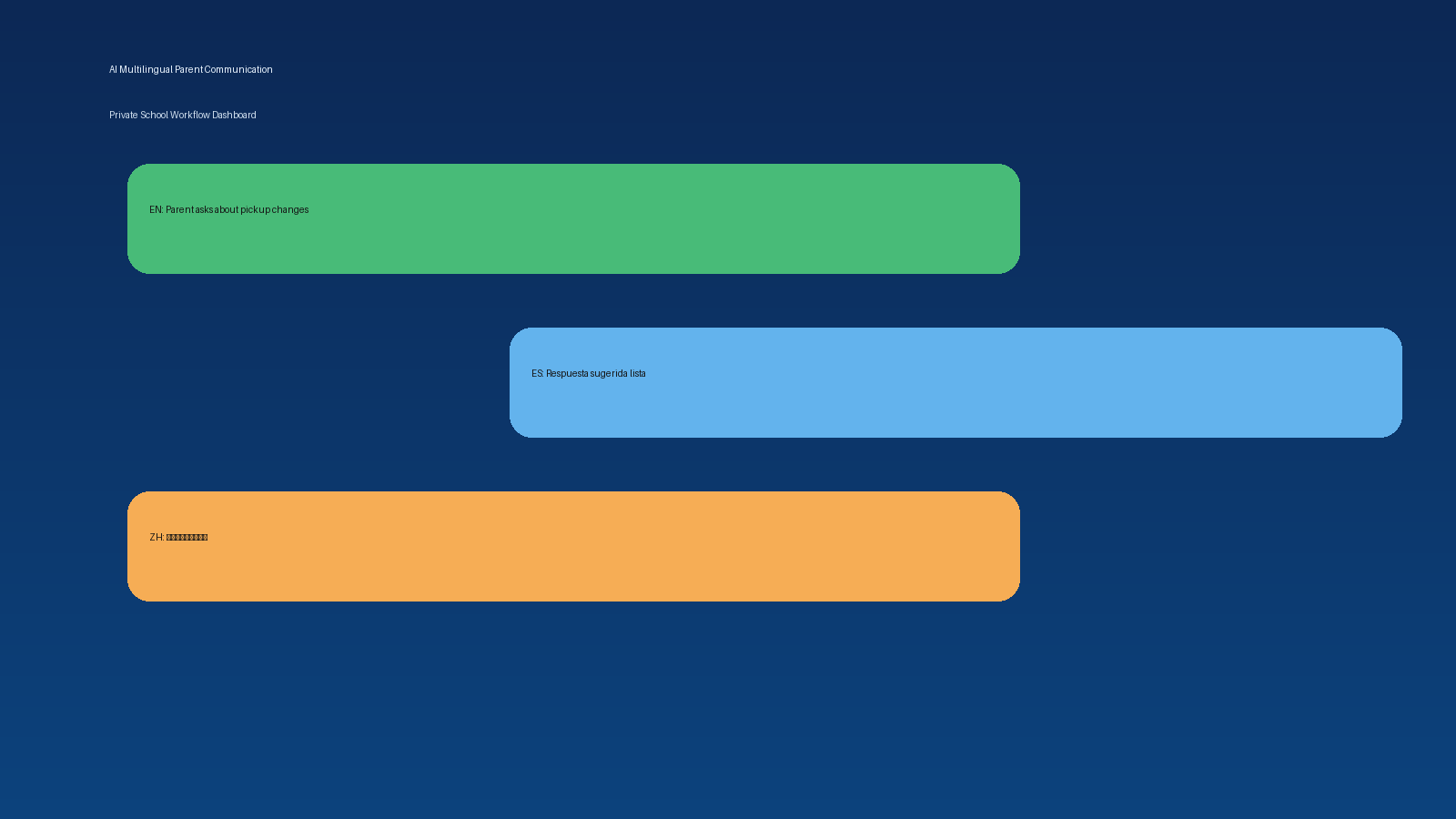
Private schools are expected to maintain warm, frequent, high-quality communication with families. In practice, many teams are small, channels are fragmented, and multilingual messages create constant translation delays.
When translation and routing happen manually, schools usually see the same failure pattern:
- slower first response for non-English-speaking families
- inconsistent tone and quality across channels
- staff overload from repetitive drafting and re-translation
- delayed escalation for high-risk topics
The objective is not autonomous messaging. The objective is operational consistency: faster routine communication, clearer escalation, and fewer preventable bottlenecks.
What the workflow looks like
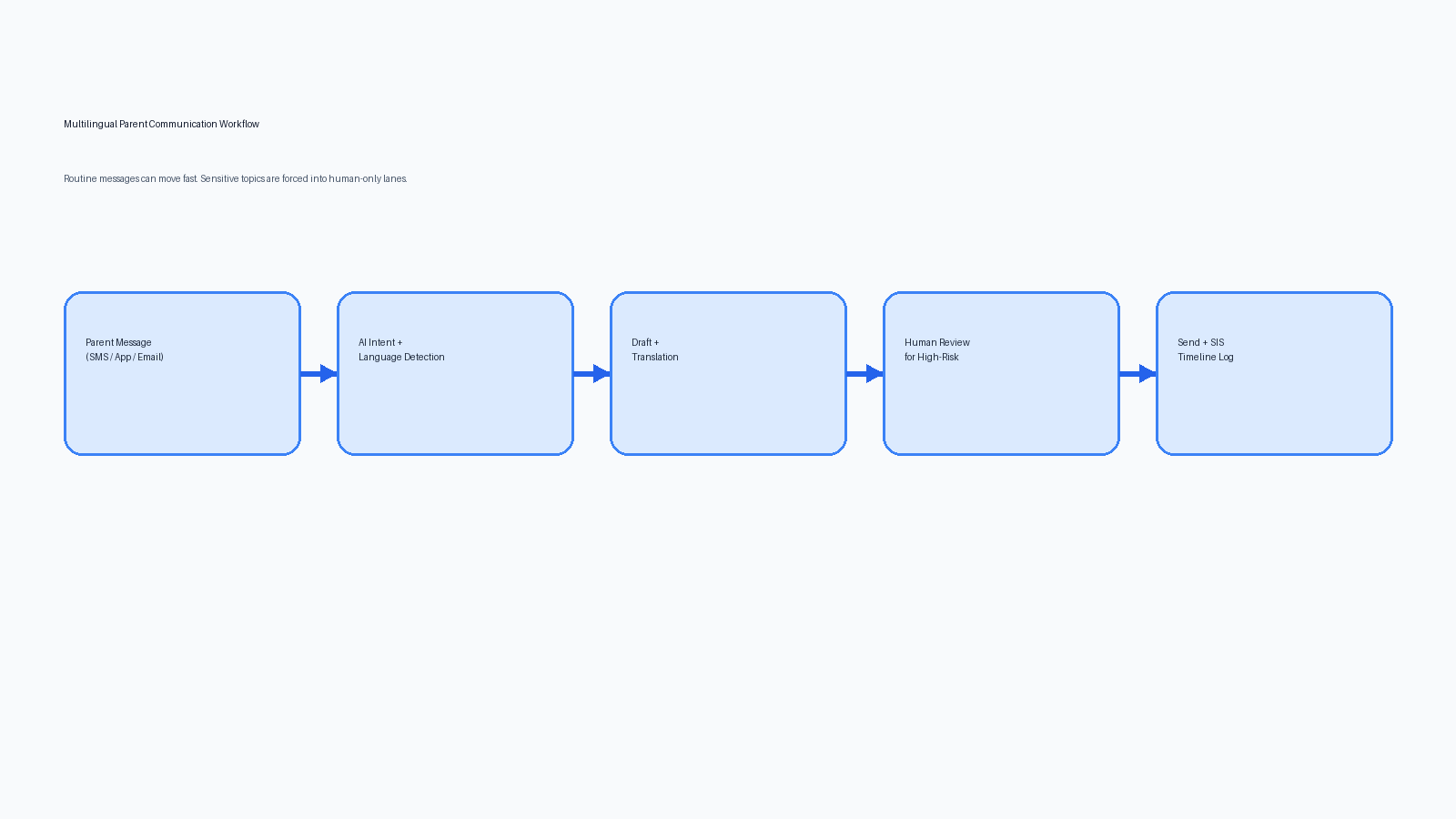
The strongest model inserts AI as a controlled layer between inbound message capture and staff response.
Practical workflow steps
- Parent message arrives through approved channels (app, SMS, email).
- AI classifies intent and detects preferred language.
- AI drafts a response in staff language and a translated parent-language version.
- Low-risk categories move to quick staff approval; high-risk categories route to human-only review.
- Sent messages are logged to the student or family timeline in the SIS/communication record.
Human-only categories should be explicit
Schools should force human review for any message tied to:
- health or counseling content
- disciplinary incidents
- financial aid or billing disputes
- legal or policy-sensitive matters
This guardrail protects families and protects the school.
Tools that fit this use case
| Layer | Role |
|---|---|
| Parent communication platform (ParentSquare, Finalsite, or similar) | Unified inbox, translation features, channel governance |
| SIS (Veracross, Blackbaud, etc.) | Source of truth for contact records and language preference fields |
| Policy-safe LLM layer | Drafting, summarization, intent labeling, translation assist |
| Workflow automation layer | Routing, SLA tagging, escalation triggers, timeline updates |
Tool choice matters less than workflow discipline. Schools win when ownership, escalation, and quality checks are operationally clear.
What a realistic rollout looks like
A 60-day pilot is enough to validate impact before district-wide or school-wide rollout.
Weeks 1-2: Define policy and baseline
- normalize guardian language preferences in SIS
- define message taxonomy (routine vs high-risk)
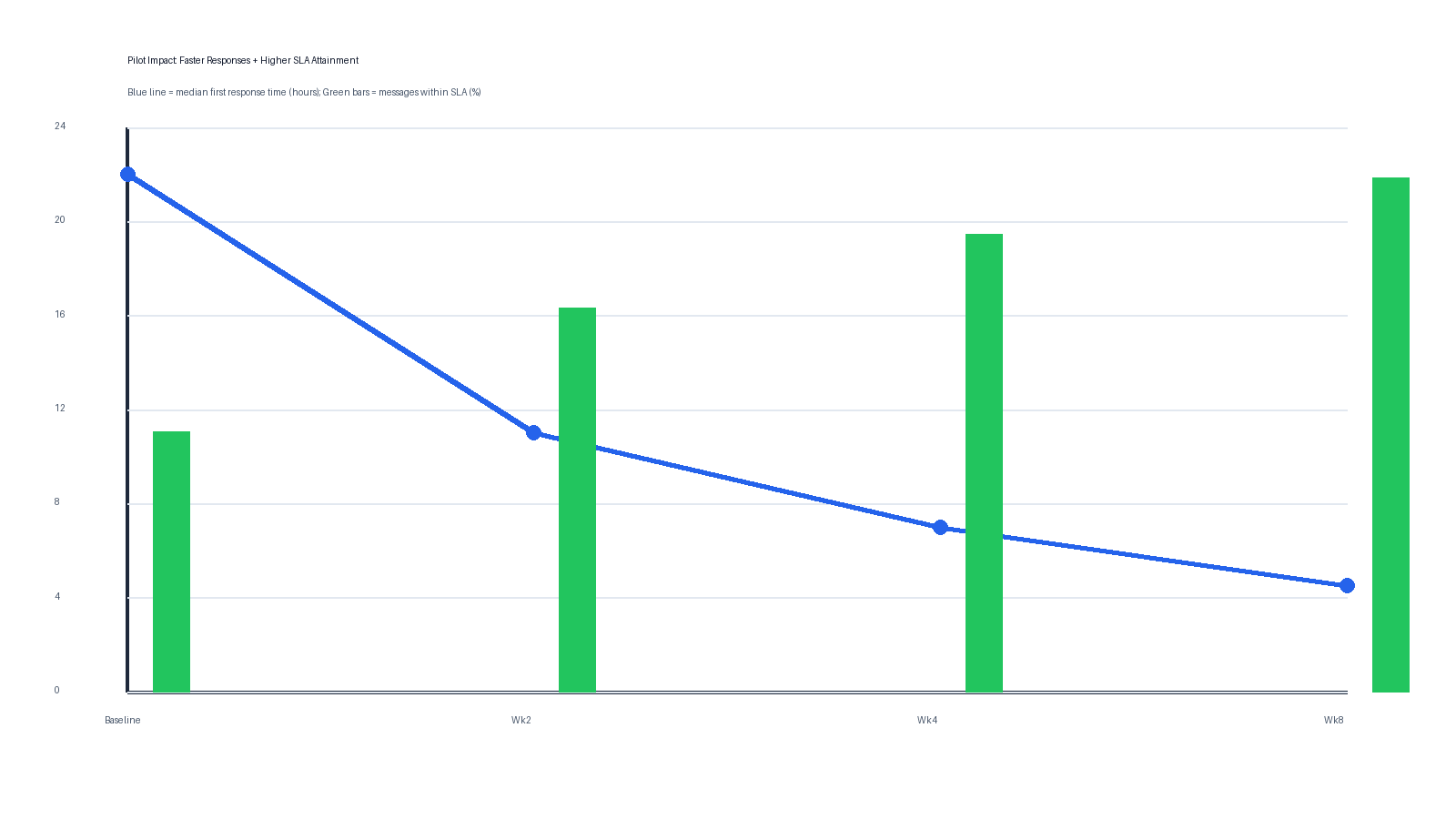
- baseline first-response time and SLA attainment by language
Weeks 3-6: Enable assistive workflows
- launch AI draft + translation for routine categories only
- require staff approval before send during early rollout
- QA sample translated outputs for nuance and clarity
Weeks 7-8: Add routing intelligence
- implement high-risk keyword escalation rules
- assign named owners for flagged threads
- review false positives and missed escalations weekly
Metrics that prove value
- median first-response time by language group
- percentage of messages resolved inside SLA
- translation turnaround time
- parent read rate and reply rate by channel
- escalation accuracy for high-risk threads
- staff time saved per 100 inbound family messages
Final takeaway
Multilingual communication does not require a bigger inbox team. It requires a better system.
For private schools, the best pattern is straightforward: AI for drafting, translation, and routing; humans for judgment and sensitive conversations; governance that makes every step auditable. When those pieces are in place, response speed improves without compromising trust.